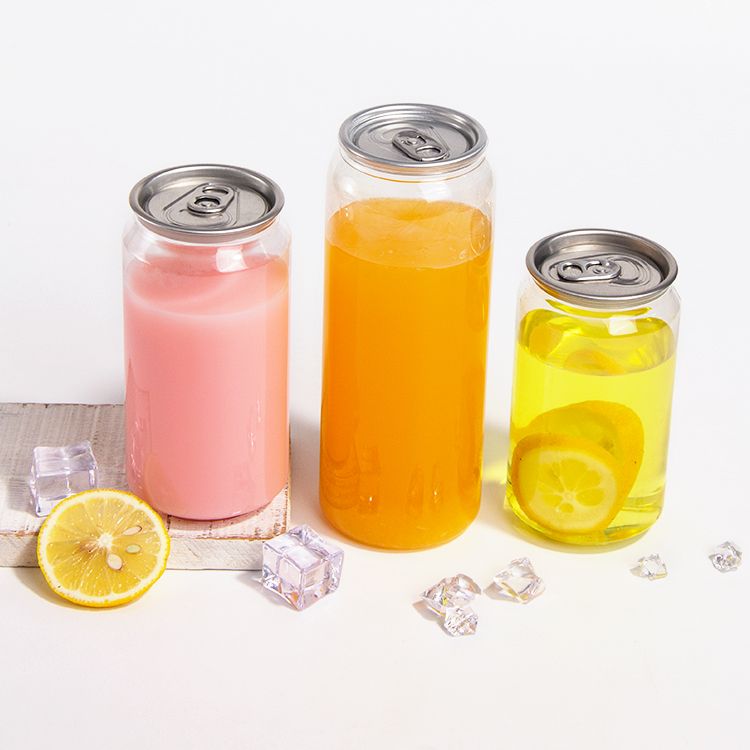
Why are PET cans an excellent option for drinks?
A variety of factors make PET bottles and cans an excellent choice for packaging beverages:
- Low weight: PET containers weigh far less than glass or metal, simplifying transport and lowering freight costs. - Toughness: PET resists breaking, improving consumer safety and cutting product losses during handling and shipment.
- Gas barrier: PET limits oxygen entry and carbon dioxide escape, helping beverages stay fresh and retain carbonation.
- Recyclable: PET is readily recyclable and widely accepted in collection programs, reducing environmental impact and supporting a circular economy.
- Economical: Producing PET containers typically costs less than making glass or aluminum, offering manufacturers a more affordable option.
- Design flexibility: PET can be shaped into countless forms and sizes, enabling distinctive packaging that boosts brand presence. - Clarity: Its transparent nature lets shoppers see the contents, a strong selling point for beverages.
- Chemical durability: PET resists many chemicals, helping preserve drink quality and reduce the risk of contamination.
- Thermal tolerance: It handles both chilled and room-temperature conditions, suiting a variety of beverages.
- Ease of use: PET bottles are often crafted for comfortable gripping and smooth pouring, improving the consumer experience.
Because of these strengths, PET is widely used for sodas, bottled water, juices, and many other drinks.